
To pass your practical driving test in Ireland, you must demonstrate safe, consistent driving with strong observation, correct positioning, and good decision-making. You may still pass with a limited number of minor faults, but serious, dangerous or repeated faults can result in failure.. You are not expected to be a perfect driver, examiners are looking for safe, consistent decision-making.
What Examiners Are Really Looking For In The Irish Driving Test
Examiners in the Irish driving test assess your ability to drive safely through observation, positioning, speed control, and confident decision-making.
During the practical driving test in Ireland, examiners assess your ability to drive safely through observation, positioning, speed control, and decision-making.
- Safe observation (mirrors + blind spots)
- Correct positioning on the road
- Appropriate speed and progress
- Confident decision-making
- Smooth vehicle control
Everything That Happens In Your Irish Driving Test
The driving test in Ireland includes vehicle checks, driving in traffic, manoeuvres, and independent driving over approximately 40–45 minutes.
Throughout the test, your observation (mirror checks and awareness) is being assessed at all times.
| Test Component | What’s Involved | Approx. Duration | Common Faults to Avoid |
|---|---|---|---|
| Eyesight Check | Read a number plate from about 20 metres to confirm legal vision standard. | ~2 minutes | Misreading the plate, hesitation, moving closer than allowed. |
| Vehicle Safety (“Show Me, Tell Me”) | Answer safety questions before and during driving about basics like lights, tyres, and fluid levels. | ~3 minutes | Inaccurate answers, not knowing where key controls are, unclear demonstrations. |
| General Driving Ability | Drive in mixed traffic conditions showing control, positioning, and hazard awareness. | ~20 minutes | Missing mirror checks, poor lane discipline, lack of anticipation. |
| Manoeuvres | Perform one reversing manoeuvre (reverse around a corner, turnabout, or reverse parking). | ~10–15 minutes | Poor observation, crossing centre lines, mounting the kerb. |
| Emergency Stop | Stop quickly and safely under control when instructed by the examiner. | ~5 minutes | Harsh braking, loss of control, forgetting mirror checks after restarting. |
| Independent Driving | Drive for about 10 minutes following road signs or a series of directions without prompts. | ~10 minutes | Missing directions, reduced awareness, over-focusing on navigation. |
| Hand Signals | Demonstrate basic hand signals for stopping or turning when asked. | ~2 minutes | Incorrect gestures or unclear timing. |
| Road Rules Questions | Answer a few questions from the Rules of the Road handbook before driving. | ~2–3 minutes | Forgetting sign meanings or road rule details. |
✅ You can make up to 15 minor faults and still pass, but one serious or dangerous fault will result in failure.
Rules of the Road Questions
- Road rules questions – expect a few questions from the Rules of the Road handbook before driving.
What to Bring on the Day Of Your Irish Driving Test
You must bring your learner permit, valid documents, and a roadworthy car to your driving test in Ireland to avoid cancellation.
RSA Practical Test Requirements:
- Valid learner permit
- Theory test pass certificate
- Booking confirmation or appointment letter
- Car insurance, motor tax, and NCT disc (if applicable)
- Clearly displayed ‘L’ plates
- A car in good working order (lights, tyres, indicators, wipers).
These are the main practical driving test Ireland requirements set by the RSA.
⚠️ If you forget key documents, your test may be cancelled, and you’ll lose your fee.
Common Reasons People Fail The Driving Test In Ireland
Common reasons people fail the driving test in Ireland include poor observation, incorrect positioning, lack of progress, and failure to follow road rules.
- Poor observation (most common reason for failure): Not checking mirrors or blind spots before turning.
- Lack of progress: Driving too slowly for conditions.
- Incorrect positioning: Cutting corners or drifting too far right.
- Failure to stop: Rolling through stop signs or lines.
- Coasting: Driving with the clutch down for long periods.
- Not following instructions: Misunderstanding examiner directions.
- Poor roundabout decisions: incorrect signalling, wrong lane position or choosing unsafe gaps.
✅ Practice smooth control, correct lane use, and clear observation routines.
If you make a mistake, don’t panic. One fault does not mean you have failed. Stay calm and continue driving safely.
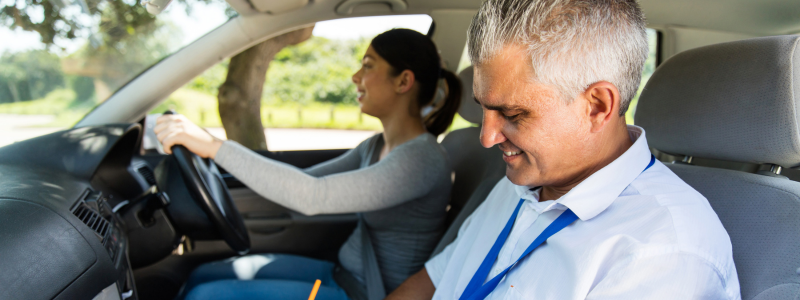
Top Tips To Pass The Driving Test In Ireland First Time
To pass the driving test in Ireland first time, focus on observation, smooth control, good positioning, and staying calm under pressure.
Your driving test can feel daunting, but good preparation, calm decision-making and clear observation can give you the best chance of passing.
Observation is the most important skill – constantly check mirrors, blind spots, and look well ahead.
- Take your time and trust your gut.
- Make sure you’re well prepared for both the oral and driving tests. Make use of theory test apps and get out on the road as much as possible. This helps avoid a situation where an unknown circumstance occurs.
- Practice your manoeuvres. With manoeuvres critical to passing, make sure you are an expert at all of them.
- You are taking your test because your instructor believes you are ready. Don’t let the occasion panic you; it is just another drive.
- Check your mirrors as much as possible. Failing to check mirrors is a common cause of test failures, so it’s best to make sure you are regularly checking and that it is obvious to your instructor that you are doing so.
- Brush up on your road signs. With tests requiring you to follow directions, knowing what road signs mean can give you that extra couple of seconds of peace of mind to get ready for any turns or stops.
- Maintain during the driving test. Driving too slowly can result in faults if it affects traffic flow.
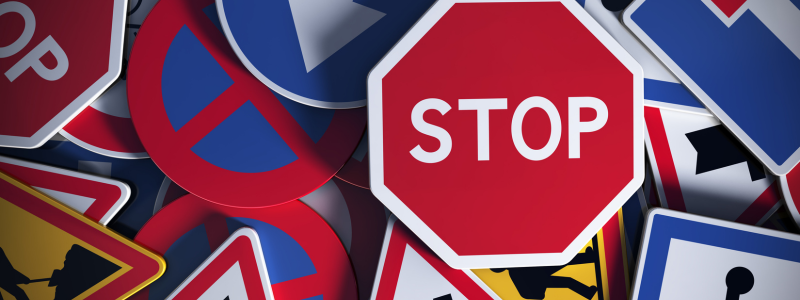
The Road Signs To Learn Before Your Driving Test
You will be asked to identify road signs from the Rules of the Road, including regulatory, warning, and motorway signs.
- Regulatory Signs
- Warning Signs
- Road Works
- Information Signs
- Motorway Signs
After the Test
Summary:
When your test ends, the examiner will review your performance and explain any faults.
If you pass your driving test, you’ll receive a Certificate of Competency that allows you to then apply for a full licence. This licence will then arrive within the following weeks.
If you don’t pass your driving test, you’ll get feedback on where you went wrong so you can focus on improving before rebooking. You can reapply immediately after receiving feedback and book a new test date when ready.

Frequently Asked Questions
Definition: The Irish practical driving test is the official RSA assessment that measures a learner driver’s ability to operate a vehicle safely, following the Rules of the Road.
Q: How many lessons do I need before my driving test in Ireland?
You must complete 12 EDT lessons with an ADI, though extra lessons can help build confidence.
Q: How long does the driving test last?
Most tests take around 40–45 minutes, including independent driving.
Q: What to expect on an Irish driving test?
On your driving test, you can expect:
- Eyesight check – read a number plate from about 20 metres.
- Vehicle safety (“Show me, tell me”) questions – basic checks like lights or tyre pressure.
- General driving ability – moving off, driving in traffic, stopping safely.
- Manoeuvres – reversing around a corner, turnabout, or reverse parking.
- Emergency stop – the examiner will ask you to stop safely, quickly, and under control.
- Independent driving – you will complete around 10 minutes of independent driving, following signs or directions without guidance.
- Hand signals – you may be asked to demonstrate these at some point.
Q: What are “show me, tell me” questions?
These are quick questions about vehicle safety, such as checking tyre pressure or demonstrating how to test brake lights.
Q: How many faults can I make and still pass?
You can have up to 15 minor faults, but any serious or dangerous fault means you will fail. Repeated minor faults in the same area (such as observation) can also result in failure.
Q: How hard is the driving test in Ireland?
Around 53% of people pass their driving test, which is around 5% higher than across the UK. This suggest the driving test is slightly easier to pass in Ireland.
Q: How to pass driving test first time in Ireland?
Pass your driving test first time with these tips:
- Take your time and trust your gut.
- Make sure you’re well prepared for both the oral and driving tests. Make use of theory test apps and get out on the road as much as possible. This helps avoid a situation where an unknown circumstance occurs.
- Practice your manoeuvres. With manoeuvres critical to passing, make sure you are an expert at all of them.
- You are taking your test because your instructor believes you are ready. Don’t let the occasion panic you; it is just another drive.
- Check your mirrors and blind spots regularly during the driving test, especially before signalling, turning, or changing speed. Failing to check mirrors is a common cause of test failures, so it’s best to make sure you are regularly checking and that it is obvious to your instructor that you are doing so.
- Brush up on your road signs. With tests requiring you to follow directions, knowing what road signs mean can give you that extra couple of seconds of peace of mind to get ready for any turns or stops.
Q: Will I fail if I can’t parallel park?
You may be asked to reverse into a space or perform another manoeuvre — if you cannot complete the assigned manoeuvre safely, it may result in failure.
Q: Do you fail if you touch the curb?
If you only slightly touch the curb, you will only receive a minor (you can pass with up to 15) but if the hit is aggressive and causes a strong impact, you could receive a major fault and fail your test.
Q: What happens when you pass your driving test in Ireland?
When you pass your test, you’ll receive a Certificate of Competency that allows you to then apply for a full licence. This licence will then arrive within the following weeks.
Q: Can I drive on my own after passing my test in Ireland?
Yes – you can drive once you pass your test, as long as you have valid insurance.
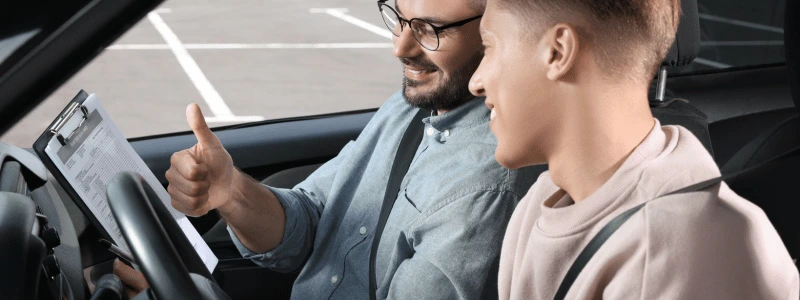
Conclusion
Passing the Irish driving test first time takes preparation, practice, and calmness under pressure. Complete your EDT lessons, know your road signs, and focus on safe, confident driving. If you don’t pass the first time, take your feedback on board — every attempt makes you a stronger, safer driver.
Key Driving Test Terms Explained
Observation in a driving test means checking mirrors, blind spots, and scanning the road ahead to anticipate hazards.
Positioning in driving refers to keeping your car correctly aligned on the road, including lane discipline, safe distance from the kerb, and correct placement at junctions and roundabouts.
Progress in a driving test means maintaining an appropriate speed for the road and traffic conditions without unnecessary hesitation or driving too slowly.
A minor fault (Grade 1 or 2) is a small driving mistake that does not significantly affect safety but may be recorded by the examiner.
A serious fault (Grade 3) is a mistake that could potentially be dangerous and will result in failing the driving test.
A dangerous fault is a critical error that poses immediate risk to you, other road users, or property and results in an automatic fail.
Independent driving is a section of the test where you follow road signs or directions for around 10 minutes without step-by-step instruction from the examiner.
A manoeuvre in the driving test is a controlled driving exercise such as a turnabout, reverse around a corner, or reverse parking.
“Show me, tell me” questions are vehicle safety questions where you explain or demonstrate basic checks like lights, tyres, or fluid levels.
Lack of progress means driving too slowly or hesitating when it is safe to move, which can result in faults during the test.